
 RU
RU
 CN
CN
Logistics Brief: Eurasia’s International Transport Corridors in April–May 2026
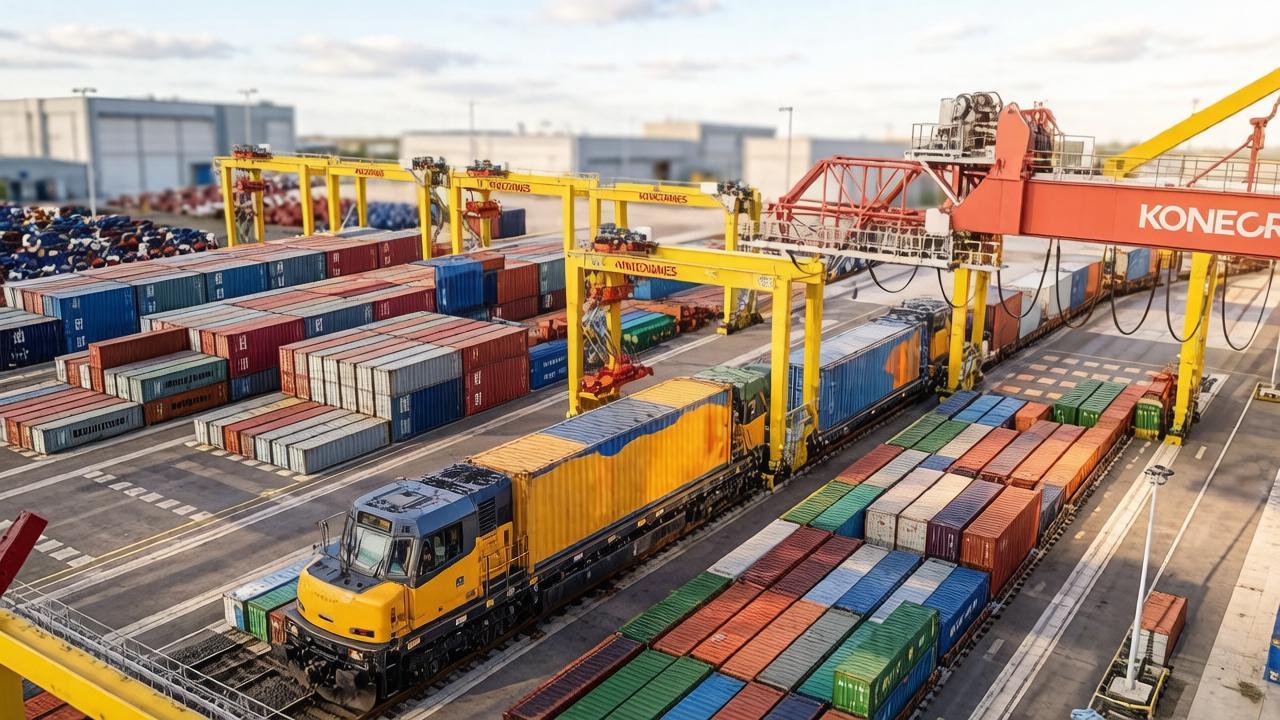
In spring 2026, Eurasian logistics saw a further redistribution of cargo flows between the northern, Trans-Caspian, and southern routes. Against the backdrop of continuing risks for maritime shipping, part of the market increased its use of overland corridors linking China, Europe, Russia, the Caucasus, and Central Asia.
According to Russia’s Ministry of Transport, in March 2026 the volume of transit container traffic between China and Europe via Russian territory rose by 45% year on year, from 21,000 to 31,000 TEU. This dynamic reflects a recovery in demand for the overland route amid restrictions and longer transit times on part of the maritime network.
At the same time, infrastructure constraints remain in place. Market participants point to dependence on quota allocation by China Railway and limited slot availability, both of which affect planning flexibility and transportation costs on certain routes.
The Trans-Caspian International Transport Route continued to expand. In the first quarter of 2026, 85 container trains travelled from Xi’an to the port of Alat via Kazakhstan, which was more than double the figure recorded a year earlier.
Against this backdrop, according to Argus, the cost of shipping a 40-foot high-cube container from Xi’an to Baku in April 2026 stood at $6,300–6,700, compared with $6,000–6,500 in March. Market participants cited higher fuel and insurance costs as the main drivers of the increase.
Another development on the Trans-Caspian route was the growing focus on eastbound traffic. Operators began to systematically work on loading the corridor from Europe and Turkey towards China in order to reduce empty container repositioning and improve the resilience of the service.
At the same time, new southern multimodal chains continued to take shape. In spring 2026, a new China–Afghanistan route via Kazakhstan, Uzbekistan, and Turkmenistan was launched. According to published data, the route is about 7,400 km long and the average transit time is around 30 days.
The new route became an alternative to the previous scheme, under which cargo was shipped mainly by sea to the Iranian port of Bandar Abbas and then moved overland to Afghanistan. The more direct land corridor improves delivery predictability and broadens the range of available logistics options for the southern direction.
Another notable trend was the continued digitalisation of border infrastructure. At Chinese border crossings, including Alashankou, the “smart rail port” model continued to be rolled out, combining electronic documentation with faster customs processing.
As a result, in April–May 2026 Eurasia’s logistics architecture continued to evolve along several tracks at once: transit via Russia increased, activity on the Trans-Caspian route expanded, and additional southern corridors were developed. For foreign trade participants, this means a greater need for flexible route planning and for taking into account differences in tariffs, transit times, and infrastructure constraints across each corridor.
Analysis of Eurasia’s transit corridors in spring 2026 points to a trend toward route diversification. For importers in the CIS, this means moving away from dependence on a single supply channel in favour of developing backup logistics schemes. In an environment of limited quotas and local tariff fluctuations, an importer’s key competitive advantage increasingly lies in working with digitalised logistics operators that have access to infrastructure on both the Northern and Trans-Caspian corridors.