
 RU
RU
 CN
CN
Olma Sets Record in Uzbekistan: 13 Grocery Stores Opened in a Single Day
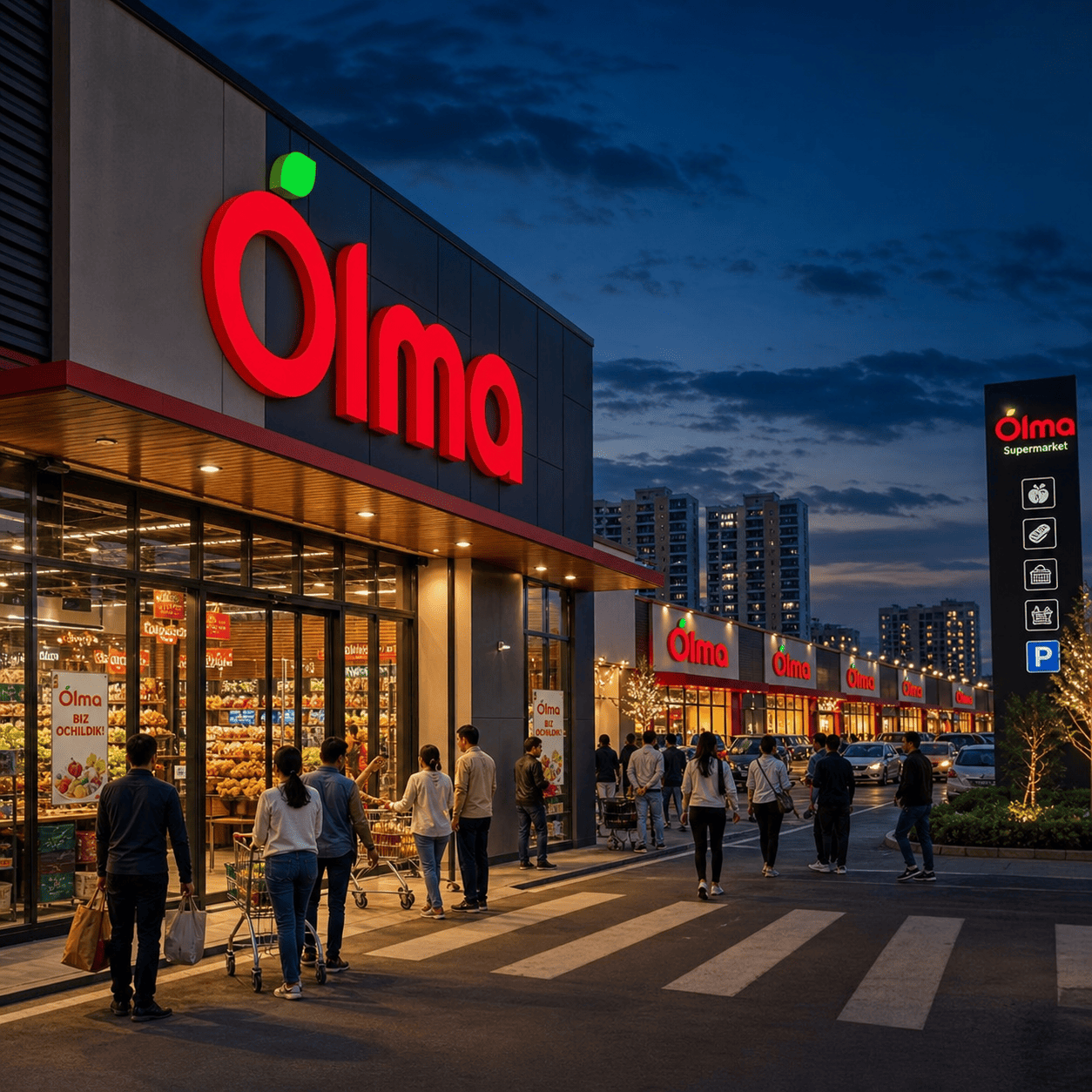
Uzbekistan’s grocery retail market has seen an unprecedented case of organic growth: the Olma supermarket chain has opened 13 new stores in just one day. According to research company INFOLine, this is one of the fastest expansion paces among FMCG retailers in Central Asia in recent years.
The scale of the simultaneous launch underscores the chain’s aggressive expansion strategy. In a single day, Olma opened 8 stores in Tashkent Region, 2 in Fergana, 2 in Samarkand and 1 in Tashkent, strengthening its presence both in the capital area and in key regional centers of the country. This “package” format of opening new outlets allows the retailer to build brand awareness more rapidly and quickly secure prime locations in the convenience store segment.
According to INFOLine, by the beginning of the second quarter of 2026 Olma was already operating more than 350 stores, with a headcount exceeding 4,000 employees. The retailer is included in the INFOLine Retail Uzbekistan Top ranking of the country’s largest FMCG chains and is demonstrating one of the highest growth dynamics in the market, on par with other major modern-format players.
Olma’s accelerated expansion has become an indicator of the profound transformation taking place in Uzbekistan’s consumer market. The share of modern retail formats — supermarkets and convenience stores — is gradually displacing traditional trade and bazaars, while competition between chains is increasingly focused on location accessibility, assortment breadth and service quality. For food and FMCG suppliers, this translates into rapid growth of sales channels and rising requirements for supply chain reliability, stock turnover speed and the quality of product assortments.
Olma’s record-setting launch of 13 stores in a single day is more than just an internal story for Uzbekistan’s retail market; it is an important signal for all participants in the supply chain, including international partners. We see local chains shifting from incremental growth to large-scale expansion waves, which in turn creates demand for systemic, predictable and regular cooperation with suppliers.
For Chinese food and FMCG manufacturers, Uzbekistan is gradually evolving from a ‘promising’ market into a strategically important one. Fast-growing chains such as Olma, with their wide regional footprint and convenience-store format, are becoming natural anchor partners for introducing new brands and categories.
From a logistics and assortment-planning standpoint, this pace of growth requires suppliers to offer not only competitive pricing, but also a robust operating model: reliable delivery schedules, assortments tailored to local preferences, and readiness to work with regional distribution centers. This is where Chinese brands need local expertise and infrastructure.
We are seeing sustained interest from Chinese manufacturers in the Uzbek market and believe that the Olma case will only accelerate this trend. The expansion of modern retail chains is creating a window of opportunity for those brands that are ready to enter the country not through isolated deals, but via structured partnerships and long-term category development programs.