
 RU
RU
 CN
CN
Retail Media in the Age of Consolidation: How Chinese Platforms Are Setting the Standards for Next-Generation Advertising
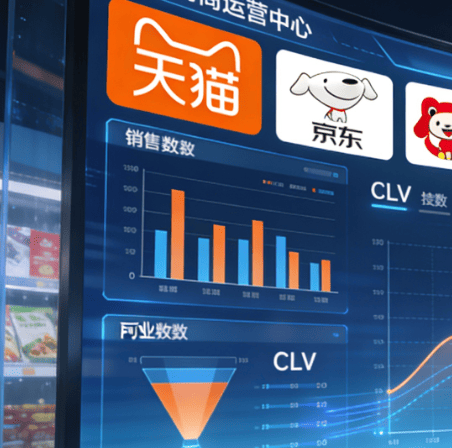
The global retail media market has entered a consolidation phase: brands are no longer willing to spread budgets indiscriminately — they demand proof of returns. In this race for advertiser trust, Chinese platforms & brands are several steps ahead.
A Market Already Bigger Than Television
In 2025, the global retail media advertising market reached $184 billion — surpassing the combined ad revenue of most national media markets for the first time. By 2030, that figure is projected to grow to $312 billion at a CAGR of approximately 11%. The two dominant hubs of this ecosystem are the United States (~38% of market share) and China (~35%), home to the world's most powerful retail advertising platforms.
China, more than any other market, shapes the architecture of modern retail media. Here, the advertising tools of Alibaba, JD.com and Pinduoduo are not merely add-ons to e-commerce — they are embedded at the infrastructure level. The model that Western platforms are still learning to master, Chinese players have refined over the past decade.
Consolidation: The End of "Advertise Everywhere"
According to research by Keen Decision Systems (February 2026, n=120 senior marketing executives), 65.2% of brands plan to increase advertising budgets in 2026 compared to the prior year. However, at the same time, 26.1% stated their intention to reallocate funds away from underperforming retail media networks into other channels.
The market is maturing: brands are moving from a "be everywhere" strategy to a "flight to quality" logic — concentrating budgets on platforms with verified ROI. This fundamentally shifts the requirements for advertising networks: those who can measure effectiveness win, not those with the most traffic.
The Chinese Model: Three Platforms, Three Approaches
China's e-commerce market is the largest in the world ($2 trillion GMV). Three key platforms divide it and have developed fundamentally different advertising models:
|
Platform |
Market Share |
Ad Model |
Audience |
|
Alibaba |
~44% |
Alimama: full-funnel — from display to conversion. Integration with Alipay data and purchase history. |
Broad — mass market to luxury |
|
JD.com |
~24% |
First-party transaction data. Focus on verified purchases and authenticity. Ad revenue growth +20%+ in 2024. |
Urban high-income shoppers, B2B |
|
Pinduoduo |
~19% |
Aggressive performance advertising. C2M model: direct factory access. Price pressure, high reach in lower-tier cities. |
Price-sensitive consumers, regional markets |
Douyin and Xiaohongshu: The Next Generation of Retail Media
Beyond the "big three", two players are radically rewriting the rules. Douyin (TikTok China), with a GMV of $477 billion in 2024, is already China's fourth-largest platform. Its advertising model is built entirely around live-stream commerce: brands place shoppable content directly within the video feed, and purchases happen without leaving the app. Douyin's ad market is growing twice as fast as traditional display advertising.
Xiaohongshu (Little Red Book) is a niche but strategically critical platform for premiumisation: luxury, beauty, lifestyle. This is where primary brand perception is formed among China's upper-middle-class consumers — before they head to Tmall or JD to make the actual purchase.
From CTR to CLV: Changing the Metric, Changing the Mindset
Globally, 26.1% of marketers consider CTR (click-through rate) the most overrated and misleading metric. 30.4% would prefer to shift to CLV (Customer Lifetime Value) as the primary KPI, with another 26.1% favouring total revenue. This is not merely a change of numbers in a report — it is a shift in strategic logic.
Chinese platforms made this transition before anyone else. Alimama (Alibaba's advertising ecosystem) already links a brand's media investments to on-platform sales and loyalty metrics. JD.com builds its advertising model on first-party transaction data — meaning ads are targeted not on abstract interests but on real purchasing behaviour. ByteDance (Douyin) goes further still: interactive formats, in-app storefronts and AI personalisation turn every advertising interaction into a purchase funnel.
What This Means for Brands Operating in the Chinese Market
China's digital advertising spend will reach $163 billion in 2026 and grow to $266 billion by 2029 at a CAGR of 17.8%. For brands from Russia, Kazakhstan and other CIS countries seeking to partner with Chinese suppliers or enter the Chinese market, this translates into several practical conclusions:
•Platform presence ≠ sales. Without an active retail media strategy — sponsored placements, Brand Zones, live-stream activations — a brand remains invisible even with a store on Tmall or JD.
•Live-commerce is not optional — it is a baseline tool. For FMCG, food and beauty categories, live broadcasts on Douyin and Taobao Live drive the majority of sales volume. Ignoring this channel means ceding the shelf to competitors.
•Platform choice determines your audience. Tmall — for brand positioning and scale. JD — for high-income quality buyers. Pinduoduo — for aggressive price positioning and reach in lower-tier cities. Xiaohongshu — for shaping brand perception and building trust.
•First-party data is the primary asset. Winners in Chinese retail media are those who have learned to work with platform first-party data. For international brands, the critical step is partnering with a TP agency (Tmall Partner) with access to that data.
A Lesson for CIS Retail: The Time to Build Retail Media Is Now
Russian and Kazakhstani marketplaces — Ozon, Wildberries, Kaspi — are following the same path as Amazon and Chinese platforms, but with a 3–5 year lag. Advertising tools are already in place, analytics are improving, and sponsored placement formats are mirroring global standards.
For suppliers and brands planning expansion through CIS marketplaces, the strategic conclusion is clear: retail media budgets must be allocated not after launching on a platform, but before. The Chinese experience shows that those who arrive with a ready media strategy claim the shelf before competitors even realise what is happening.
EXPERT VIEW | RetailChina.pro
"The Chinese retail media market is not merely an advertising tool — it is the operational infrastructure of sales. Brands that enter Tmall or JD.com without a media strategy spend on average 40–60% more to acquire their first buyer, and lose out in organic ranking to those who invest in sponsored placements and review management from day one. We see this consistently in our work with Chinese supplier partners: entering the market without a retail media budget means entering blind."
Scan QR code in WeChat to share this news